

Hey there! As a supplier of FPC antennas, I often get asked about the near - field region of an FPC antenna. So, I thought I'd write this blog to share what it is and why it matters.
Let's start with the basics. An FPC antenna, or Flexible Printed Circuit antenna, offers several advantages like flexibility, light - weight, and the ability to be customized easily. We offer a wide range of FPC antennas, including FPC Wifi Antenna and FPC 4G Antenna, which are used in various electronic devices such as smartphones, tablets, and wearables.
Now, onto the near - field region. The near - field region of an antenna is the area close to the antenna where the electromagnetic field behavior is a bit different from what we see in the far - field. There are two sub - regions within the near - field: the reactive near - field and the radiating near - field.
The reactive near - field is the area closest to the antenna. In this region, the stored energy in the electromagnetic field is more significant than the radiated energy. The field here is highly reactive, which means that the electric and magnetic fields are not in a simple, well - behaved relationship like they are in the far - field. The reactive near - field is dominated by the antenna's capacitance and inductance effects. For an FPC antenna, this region can be affected by the antenna's physical structure, like its shape, size, and the way it's printed on the flexible circuit.
The radiating near - field, also known as the Fresnel region, is the area just outside the reactive near - field. In this region, the radiated energy starts to become more prominent, but the field still has some complex characteristics. The wavefronts in the radiating near - field are not yet planar like in the far - field. The distance from the antenna to the boundary of the radiating near - field depends on the antenna's size and the operating frequency.
So, why does the near - field region matter for an FPC antenna? Well, for one, it can have a big impact on the antenna's performance. In the near - field, the antenna can interact strongly with nearby objects. If there are other components or conductors close to the FPC antenna, they can cause interference and change the antenna's radiation pattern. For example, if a smartphone has other metal parts near the FPC antenna, the near - field interaction can lead to signal loss or distortion.
Another important aspect is in the design and testing of FPC antennas. When we're designing an FPC antenna, we need to consider the near - field behavior to ensure that it will work well in the intended device. During testing, we often measure the near - field characteristics to understand how the antenna will perform in real - world scenarios. By analyzing the near - field, we can optimize the antenna's design to reduce interference and improve its overall efficiency.
Let's take a look at some real - world examples. In a smartwatch, the FPC antenna is usually placed very close to the user's body. The near - field interaction between the antenna and the human body can have a significant impact on the antenna's performance. The body can absorb some of the radiated energy in the near - field, leading to reduced signal strength. To counter this, we need to design the FPC antenna in a way that minimizes the near - field interaction with the body.
In a wireless earbud, the FPC antenna is in a small, confined space with other electronic components. The near - field interference between the antenna and these components can cause problems like poor signal quality or reduced range. By understanding the near - field behavior, we can place the antenna and other components in the earbud in an optimal way to reduce these issues.
When it comes to the size of the near - field region for an FPC antenna, it can vary depending on the antenna's design and operating frequency. Generally, for lower frequencies, the near - field region extends further from the antenna compared to higher frequencies. This is because the wavelength at lower frequencies is longer, and the electromagnetic field takes more distance to become well - behaved.
We also need to consider the orientation of the FPC antenna. The near - field characteristics can change depending on how the antenna is oriented in space. For example, if the FPC antenna is bent or twisted, the near - field distribution can be altered, which can affect its performance in the device.
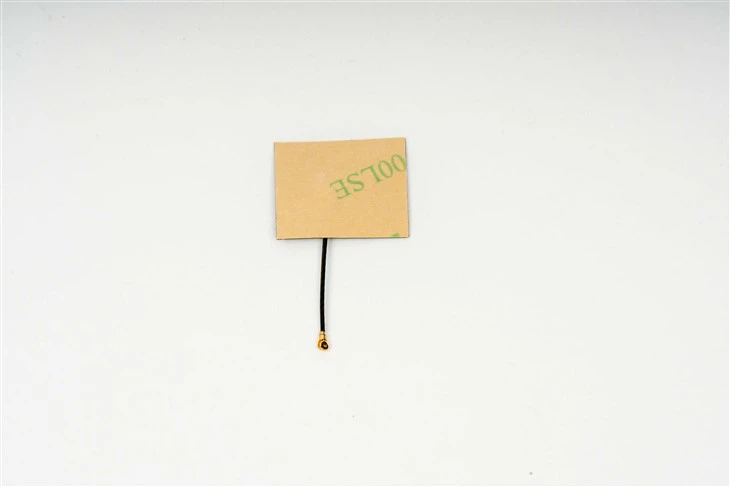

In the manufacturing process of FPC antennas, we pay close attention to the near - field behavior. Any small variations in the manufacturing process, like the thickness of the conductive layer or the alignment of the antenna pattern, can change the near - field characteristics. So, we have strict quality control measures in place to ensure that each FPC antenna has consistent near - field performance.
As a supplier of FPC antennas, we're always looking for ways to improve the near - field performance of our products. We use advanced simulation tools to model the near - field behavior of the antennas during the design phase. This allows us to predict how the antenna will interact with nearby objects and make adjustments to the design as needed.
We also conduct extensive testing on our FPC antennas in real - world environments. By measuring the near - field characteristics in different scenarios, we can fine - tune the antenna's design to meet the specific requirements of our customers.
If you're in the market for high - quality FPC antennas, whether it's FPC Wifi Antenna or FPC 4G Antenna, we'd love to talk to you. We have a team of experts who can help you choose the right antenna for your application and ensure that it performs well in your device. Don't hesitate to reach out for a discussion on your antenna needs. We're here to provide you with the best solutions and support for your projects.
In conclusion, the near - field region of an FPC antenna is a complex but crucial aspect of its performance. Understanding the near - field behavior helps us design better antennas, reduce interference, and improve the overall performance of the electronic devices in which these antennas are used. If you have any questions or need more information about FPC antennas and their near - field characteristics, feel free to contact us.
References:
- Antenna Theory: Analysis and Design by Constantine A. Balanis
- Wireless Communication Electronics by Thomas K. Young