

When it comes to wireless communication devices, the FPC (Flexible Printed Circuit) WiFi antenna plays a crucial role in ensuring stable and efficient signal transmission. As a reputable FPC WiFi antenna supplier, I am often asked about the materials used in these antennas. In this blog post, I will delve into the details of the materials that make up FPC WiFi antennas, exploring their properties, advantages, and how they contribute to the performance of the antenna.
The Basics of FPC WiFi Antennas
Before we discuss the materials, let's briefly understand what FPC WiFi antennas are. FPC antennas are a type of antenna that uses a flexible printed circuit board. They are lightweight, thin, and conformable, which makes them ideal for applications where space is limited or a flexible design is required, such as in smartphones, tablets, wearables, and IoT devices.
WiFi antennas are specifically designed to operate in the frequency bands allocated for WiFi communication, typically 2.4 GHz and 5 GHz. These antennas need to have good gain, radiation pattern, and impedance matching to ensure reliable wireless connectivity.
Materials Used in FPC WiFi Antennas
Substrate Material
The substrate is the base material of the FPC antenna. It provides mechanical support for the conductive patterns on the antenna and affects the electrical properties of the antenna. One of the most commonly used substrate materials for FPC WiFi antennas is polyimide (PI).
Polyimide has several advantages that make it suitable for this application. Firstly, it has excellent thermal stability, which means it can withstand the high temperatures generated during the manufacturing process and in the operation of electronic devices. This is important because temperature variations can affect the electrical performance of the antenna. Secondly, polyimide has good chemical resistance, which protects the antenna from damage caused by environmental factors such as moisture and chemicals. Thirdly, it has a low dielectric constant, which helps to reduce signal loss and improve the antenna's efficiency.
Another substrate material that is sometimes used is polyethylene terephthalate (PET). PET is a more cost - effective alternative to polyimide. It has good flexibility and transparency, which can be useful in some applications. However, it has lower thermal stability compared to polyimide, so it may not be suitable for high - temperature environments.
Conductive Material
The conductive material on the FPC antenna is responsible for transmitting and receiving electromagnetic signals. The most common conductive material used is copper.
Copper is an excellent conductor of electricity, which means it can efficiently carry the electrical current associated with the electromagnetic waves. It has low resistivity, which reduces power loss and improves the antenna's performance. Copper also has good ductility, which allows it to be easily formed into the complex patterns required for the antenna design.
In some cases, silver may also be used as a conductive material. Silver has even lower resistivity than copper, which can potentially provide better electrical conductivity. However, silver is more expensive than copper, so it is usually used in high - end applications where the performance improvement justifies the cost.
Adhesive Material
Adhesives are used to bond the different layers of the FPC antenna together. A good adhesive should have strong bonding strength, good flexibility, and high temperature resistance. Epoxy - based adhesives are commonly used in FPC antennas.

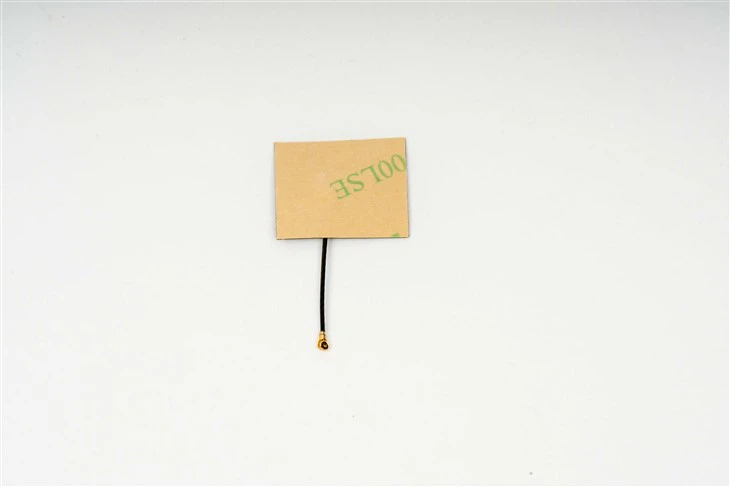
Epoxy adhesives can provide a strong and durable bond between the substrate and the conductive layers. They can also withstand the mechanical stress and temperature variations that the antenna may experience during its lifetime. Additionally, epoxy adhesives have good chemical resistance, which helps to protect the antenna from environmental damage.
How Material Properties Affect Antenna Performance
Dielectric Constant of the Substrate
The dielectric constant of the substrate material affects the electrical length of the antenna. A lower dielectric constant results in a longer electrical length for a given physical length of the antenna. This means that an antenna with a lower dielectric constant substrate can be made smaller while still operating at the same frequency.
For example, if two antennas have the same physical dimensions but one is on a substrate with a lower dielectric constant, the one with the lower dielectric constant will resonate at a lower frequency. This property is important in the design of compact FPC WiFi antennas, where space is a major constraint.
Conductivity of the Conductive Material
The conductivity of the conductive material directly affects the antenna's radiation efficiency. A higher conductivity material, such as silver or high - quality copper, can reduce the power loss in the antenna due to resistance. This results in a higher radiation efficiency, which means that more of the electrical power fed into the antenna is converted into electromagnetic radiation.
In practical terms, an antenna with higher radiation efficiency can transmit and receive signals over a longer distance and with better signal quality. This is crucial for WiFi antennas, especially in environments with high interference or long - range communication requirements.
Bonding Strength of the Adhesive
The bonding strength of the adhesive is important for the mechanical stability of the FPC antenna. A strong bond ensures that the different layers of the antenna stay together, even under mechanical stress such as bending or vibration.
If the adhesive bond is weak, the layers of the antenna may delaminate, which can lead to a change in the electrical properties of the antenna and a degradation of its performance. Therefore, using a high - quality adhesive with strong bonding strength is essential for the long - term reliability of FPC WiFi antennas.
Our Antenna Offerings
As a supplier of FPC WiFi antennas, we take great pride in using high - quality materials to ensure the best performance of our products. Our FPC Wifi Antenna are designed and manufactured using the latest technology and the finest materials available.
In addition to our WiFi antennas, we also offer FPC 4G Antenna for applications that require 4G connectivity. These antennas are also made with high - quality materials to provide reliable and stable communication.
Why Quality Materials Matter
Using high - quality materials in FPC WiFi antennas is not just about performance. It also has implications for the overall cost - effectiveness and reliability of the end - product.
High - quality materials are more durable and less prone to failure, which means that the antennas have a longer lifespan. This reduces the need for frequent replacements and maintenance, resulting in lower long - term costs for the end - user.
Moreover, antennas made with high - quality materials are more likely to meet the strict performance standards and regulatory requirements in the industry. This ensures that the devices using these antennas can operate smoothly and legally in different environments.
Contact Us for Your Antenna Needs
If you are in the market for high - quality FPC WiFi antennas or other types of FPC antennas, we would be more than happy to discuss your requirements. Our team of experts can provide you with detailed information about our products and help you choose the right antenna for your application.
Whether you are designing a new product or looking to upgrade an existing one, we can offer customized solutions to meet your specific needs. Don't hesitate to reach out to us for more information and to start a fruitful purchasing negotiation.
References
- "Flexible Printed Circuits: Design, Manufacturing, and Assembly" by C.P. Wong
- "Antenna Engineering Handbook" by Richard C. Johnson