

In the realm of wireless communication, Flexible Printed Circuit (FPC) antennas have emerged as a crucial component, offering flexibility, light - weight, and cost - effectiveness. As a supplier of FPC antennas, understanding the far - field region of an FPC antenna is of utmost importance, not only for technical proficiency but also for providing the best products to our customers.
Definition and Significance of the Far - Field Region
The far - field region, also known as the Fraunhofer region, is a critical concept in antenna theory. It is the region where the electromagnetic field radiated by an antenna exhibits certain characteristics. In this region, the electromagnetic waves behave as plane waves, and the field strength decreases inversely with the distance from the antenna.
The significance of the far - field region lies in its direct relation to the performance of the antenna in real - world applications. Most wireless communication scenarios rely on the far - field radiation of the antenna. For example, when a mobile device communicates with a base station, the signal is transmitted and received in the far - field region. Understanding this region helps in accurately predicting the antenna's radiation pattern, gain, and directivity, which are key factors in determining the overall performance of the wireless system.
Criteria for Defining the Far - Field Region
There are several criteria to define the far - field region of an antenna. One of the most commonly used criteria is based on the distance from the antenna. For an antenna with the largest dimension (D), the far - field region starts at a distance (R) from the antenna, where (R\geq\frac{2D^{2}}{\lambda}), and (\lambda) is the wavelength of the radiated signal.
This criterion is derived from the fact that in the far - field region, the phase difference between different parts of the antenna's radiating aperture becomes negligible compared to the wavelength. As a result, the electromagnetic waves radiated from different points on the antenna can be considered to be in phase, and the wavefronts become planar.
Another aspect to consider is the angular distribution of the radiation. In the far - field region, the radiation pattern of the antenna becomes independent of the distance from the antenna. This means that the shape and relative intensities of the lobes in the radiation pattern remain the same as the observer moves further away from the antenna in the far - field region.
Characteristics of the Far - Field Region of an FPC Antenna
FPC antennas have unique characteristics in the far - field region due to their structure and design. Firstly, FPC antennas are usually thin and flexible, which allows them to be easily integrated into various devices. This flexibility can have an impact on the far - field radiation pattern. For example, if the FPC antenna is bent or curved, the radiation pattern may be distorted compared to the ideal case.
The far - field radiation pattern of an FPC antenna is also affected by its operating frequency. Different frequencies result in different wavelengths, which in turn change the far - field distance and the shape of the radiation pattern. At higher frequencies, the wavelength is shorter, and the far - field region starts closer to the antenna.
In addition, the materials used in FPC antennas can influence the far - field performance. The dielectric constant of the substrate material affects the propagation of the electromagnetic waves within the antenna, which can ultimately impact the far - field radiation. For instance, a substrate with a high dielectric constant may cause more signal loss and change the radiation pattern.
Measuring the Far - Field Region of an FPC Antenna
Measuring the far - field region of an FPC antenna is a complex but essential task. One common method is to use an anechoic chamber. An anechoic chamber is a room designed to absorb all reflections of electromagnetic waves, creating a free - space environment. In an anechoic chamber, the antenna under test is placed at a known distance from a receiving antenna, and the radiation pattern is measured.
By varying the distance between the transmitting and receiving antennas, the far - field region can be determined. When the measured radiation pattern becomes independent of the distance, it indicates that the far - field region has been reached.
Another approach is to use numerical simulation software. Software such as CST Microwave Studio or HFSS can be used to model the FPC antenna and simulate its electromagnetic behavior. These simulations can provide detailed information about the far - field radiation pattern, gain, and directivity of the antenna without the need for physical measurements.
Applications of Understanding the Far - Field Region in FPC Antenna Design
Understanding the far - field region is crucial in FPC antenna design. In the design process, engineers need to ensure that the antenna meets the performance requirements in the far - field region. For example, if the antenna is designed for a specific application such as a mobile phone, the far - field radiation pattern should be optimized to provide good coverage in all directions.
By accurately predicting the far - field performance, engineers can make adjustments to the antenna's shape, size, and material to improve its performance. For instance, if the far - field gain of the antenna is too low, the engineer may increase the size of the radiating element or change the substrate material to reduce signal loss.
Our FPC Antenna Products and the Far - Field Region
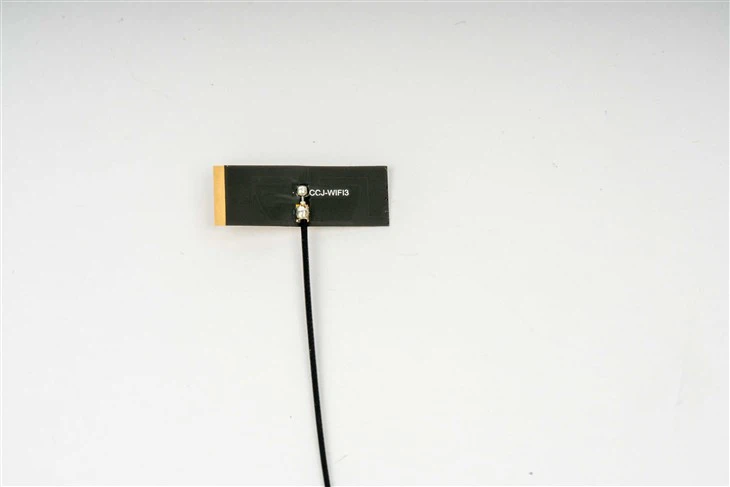
As an FPC antenna supplier, we offer a wide range of products, including FPC 4G Antenna and FPC Wifi Antenna. For each of these products, we pay close attention to the far - field performance.
Our R & D team uses advanced simulation tools and measurement techniques to ensure that our FPC antennas have excellent far - field radiation patterns, high gain, and good directivity. We understand that in the competitive wireless market, the performance of the antenna in the far - field region can make a significant difference in the overall performance of the end - product.

Conclusion and Call to Action
In conclusion, the far - field region of an FPC antenna is a critical concept that affects the performance of wireless communication systems. As a supplier, we are committed to providing high - quality FPC antennas with excellent far - field performance. Our products are designed and tested to meet the diverse needs of our customers in various applications.
If you are in the market for FPC antennas and are looking for a reliable supplier, we invite you to contact us for procurement and further discussions. Our team of experts is ready to assist you in selecting the most suitable FPC antenna for your specific requirements.
References
- Balanis, C. A. (2016). Antenna Theory: Analysis and Design. Wiley.
- Pozar, D. M. (2012). Microwave Engineering. Wiley.