

As a supplier specializing in FPC 4G Antennas, I understand the critical role that bandwidth plays in the performance of these antennas. In today's fast - paced digital age, where data consumption is skyrocketing, increasing the bandwidth of FPC 4G Antennas is not just a technical challenge but also a business necessity. In this blog, I will share some insights and strategies on how to achieve this goal.
Understanding the Basics of FPC 4G Antenna Bandwidth
Before delving into the methods of increasing bandwidth, it's essential to understand what bandwidth means for an FPC 4G Antenna. Bandwidth refers to the range of frequencies over which an antenna can operate effectively. A wider bandwidth allows the antenna to transmit and receive more data simultaneously, resulting in faster data transfer rates and better overall performance.
The bandwidth of an FPC 4G Antenna is influenced by several factors, including its physical design, the materials used, and the surrounding electromagnetic environment. For instance, the shape and size of the antenna's radiating element can have a significant impact on its bandwidth. A well - designed radiating element can resonate over a broader range of frequencies, thereby increasing the antenna's bandwidth.
Optimizing the Physical Design of FPC 4G Antennas
One of the most effective ways to increase the bandwidth of an FPC 4G Antenna is through optimizing its physical design. Here are some key design considerations:
Radiating Element Shape
The shape of the radiating element can be tailored to enhance the antenna's bandwidth. For example, using a meandering or fractal - like shape can increase the electrical length of the radiating element without significantly increasing its physical size. This allows the antenna to resonate at multiple frequencies, effectively widening its bandwidth.
Ground Plane Design
The ground plane is an important part of the FPC 4G Antenna design. A properly designed ground plane can help to improve the antenna's impedance matching and radiation pattern. By adjusting the size, shape, and position of the ground plane, we can optimize the antenna's performance and increase its bandwidth. For instance, a larger ground plane can provide more stability to the antenna's radiation pattern and may allow for a wider bandwidth.
Antenna Thickness and Substrate Material
The thickness of the FPC antenna and the type of substrate material used also play a role in determining its bandwidth. Thinner substrates can sometimes lead to better high - frequency performance and wider bandwidths. Additionally, choosing a substrate material with low dielectric loss can reduce signal attenuation and improve the antenna's overall efficiency, which in turn can contribute to increased bandwidth.
Employing Advanced Materials and Technologies
In addition to design optimization, the use of advanced materials and technologies can also help to increase the bandwidth of FPC 4G Antennas.
High - Performance Conductive Materials
Using high - performance conductive materials, such as copper with high purity, can reduce the resistance of the antenna's radiating element. Lower resistance means less power loss and better signal transmission, which can result in an increased bandwidth. Some advanced conductive polymers can also be considered, as they offer unique electrical properties that may be beneficial for bandwidth enhancement.
Metamaterials
Metamaterials are artificial materials engineered to have properties not found in natural materials. By incorporating metamaterials into the design of FPC 4G Antennas, we can manipulate the electromagnetic waves in a way that allows for wider bandwidth operation. For example, some metamaterials can be designed to create negative refractive indices, which can be used to control the propagation of electromagnetic waves and increase the antenna's bandwidth.
Multi - Band and Wide - Band Antenna Technologies
Implementing multi - band or wide - band antenna technologies can also be an effective strategy. Multi - band antennas are designed to operate at multiple discrete frequency bands, while wide - band antennas can cover a continuous range of frequencies. By using these technologies, FPC 4G Antennas can be made to support a wider range of frequencies, thereby increasing their overall bandwidth.

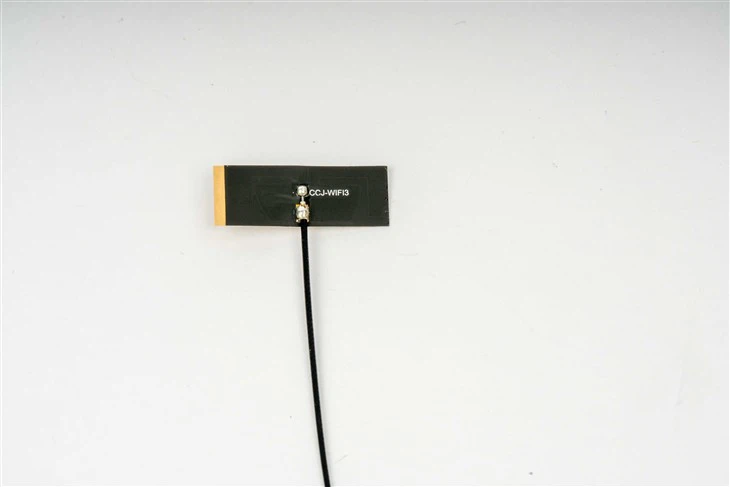
Considering the Electromagnetic Environment
The electromagnetic environment in which the FPC 4G Antenna operates can have a significant impact on its bandwidth. Here are some factors to consider:
Interference Mitigation
Interference from other electronic devices or wireless signals can reduce the effective bandwidth of the FPC 4G Antenna. To mitigate interference, we can use techniques such as shielding, filtering, and frequency hopping. Shielding can prevent external electromagnetic fields from affecting the antenna, while filtering can remove unwanted frequencies from the received or transmitted signals. Frequency hopping allows the antenna to switch between different frequencies to avoid interference.
Antenna Placement
Proper antenna placement is crucial for maximizing the bandwidth. The antenna should be placed in an area where it has a clear line - of - sight to the base station or other communication devices. Avoiding placement near metal objects or other sources of electromagnetic interference can also help to improve the antenna's performance and increase its bandwidth.
Testing and Validation
Once the design and material changes have been made to increase the bandwidth of the FPC 4G Antenna, it's essential to conduct thorough testing and validation. This includes measuring the antenna's bandwidth using specialized test equipment, such as a network analyzer. The antenna's radiation pattern, gain, and efficiency should also be measured to ensure that the bandwidth increase does not come at the expense of other important performance parameters.
Conclusion
Increasing the bandwidth of FPC 4G Antennas is a complex but achievable goal. By optimizing the physical design, employing advanced materials and technologies, considering the electromagnetic environment, and conducting rigorous testing, we can significantly enhance the bandwidth of these antennas.
As a leading supplier of FPC 4G Antenna, we are committed to providing high - performance antennas that meet the evolving needs of our customers. Our team of experienced engineers is constantly researching and developing new techniques to increase the bandwidth and improve the overall performance of our FPC 4G Antennas.
If you are in the market for high - bandwidth FPC 4G Antennas or FPC Wifi Antenna, we invite you to contact us for a detailed discussion. We can provide customized solutions based on your specific requirements and help you achieve the best possible performance for your wireless communication systems.
References
- Balanis, C. A. (2016). Antenna Theory: Analysis and Design. Wiley.
- Stutzman, W. L., & Thiele, G. A. (2012). Antenna Theory and Design. Wiley.
- Pozar, D. M. (2011). Microwave Engineering. Wiley.