

In the realm of modern wireless communication, the demand for high - performance antennas that can support multiple frequency bands is on the rise. As a leading supplier of FPC 4G Antenna, I am often asked the question: Does FPC 4G Antenna support multiple frequency bands? In this blog post, I will delve into this topic, exploring the technical capabilities of FPC 4G Antennas and their potential to operate across multiple frequency bands.
Understanding FPC 4G Antennas
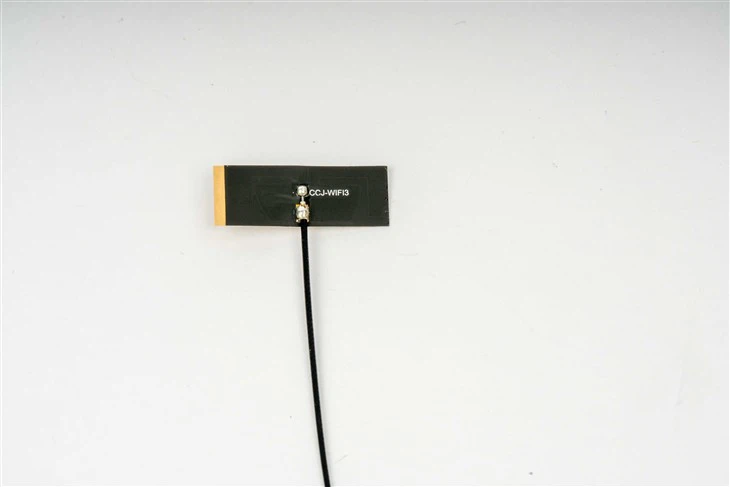
FPC, or Flexible Printed Circuit, 4G Antennas are a type of antenna that utilizes flexible printed circuit technology. This technology allows for the creation of antennas that are lightweight, thin, and can be easily integrated into various devices. The flexibility of FPC 4G Antennas makes them an ideal choice for applications where space is limited or where the antenna needs to conform to a specific shape.

The 4G network operates in several frequency bands around the world. These bands are divided into two main categories: the low - band (usually below 1 GHz) and the high - band (above 1 GHz). The low - band offers better coverage and penetration, while the high - band provides higher data rates. For a 4G device to work effectively, it needs an antenna that can support these different frequency bands.
Technical Capabilities for Multiple Frequency Bands
FPC 4G Antennas have the technical potential to support multiple frequency bands. The design of FPC 4G Antennas can be optimized to resonate at different frequencies. This is achieved through careful selection of the antenna's shape, size, and the materials used in its construction.
One of the key factors in enabling multi - band support is the use of a multi - resonant structure. By creating multiple resonant paths within the antenna, it can respond to different frequencies. For example, a FPC 4G Antenna can be designed with a combination of short and long resonant elements. The short elements can be tuned to resonate at high frequencies, while the long elements can be tuned to resonate at low frequencies.
Another approach is the use of impedance matching techniques. Impedance matching ensures that the antenna can efficiently transfer energy between the device and the air at different frequencies. By carefully adjusting the impedance of the antenna at different frequency points, it can achieve good performance across a wide range of frequencies.
Advantages of Multi - Band Support in FPC 4G Antennas
There are several advantages to having FPC 4G Antennas that support multiple frequency bands.
Global Compatibility
With different countries and regions using different frequency bands for 4G networks, a multi - band FPC 4G Antenna allows devices to be used globally. This is especially important for mobile devices such as smartphones and tablets, which are often used by travelers. A device equipped with a multi - band FPC 4G Antenna can connect to 4G networks in different parts of the world without the need for multiple antennas or complex switching mechanisms.
Improved Signal Quality
Multi - band support can also improve the overall signal quality. In areas where multiple frequency bands are available, the device can select the band with the best signal strength and quality. This can result in more stable connections, faster data transfer rates, and fewer dropped calls.
Space and Cost Efficiency
Using a single multi - band FPC 4G Antenna instead of multiple single - band antennas can save space within the device. This is crucial for small - form - factor devices such as wearables and IoT devices. Additionally, it can reduce the cost of manufacturing, as fewer components are required.
Challenges in Achieving Multi - Band Support
While FPC 4G Antennas have the potential to support multiple frequency bands, there are also some challenges in achieving this.
Design Complexity
Designing a FPC 4G Antenna to support multiple frequency bands requires a high level of expertise. The antenna designer needs to balance the performance requirements at different frequencies, taking into account factors such as impedance matching, radiation patterns, and mutual coupling between different resonant elements.
Interference
As the antenna operates across multiple frequency bands, there is a risk of interference between different bands. This can degrade the performance of the antenna and the overall device. To mitigate this, advanced filtering and shielding techniques need to be employed.
Our Offerings as an FPC 4G Antenna Supplier
As a professional FPC 4G Antenna supplier, we have extensive experience in designing and manufacturing multi - band FPC 4G Antennas. Our team of experts uses the latest simulation tools and design techniques to optimize the antenna's performance across multiple frequency bands.
We offer a wide range of FPC 4G Antennas that are suitable for various applications, including smartphones, tablets, IoT devices, and wearables. Our antennas are designed to meet the highest quality standards, ensuring reliable performance in different environments.
In addition to our FPC 4G Antennas, we also provide FPC Wifi Antenna. These antennas are designed to work in the Wi - Fi frequency bands, providing seamless connectivity for devices. You can learn more about our FPC 4G Antenna on our website.
Conclusion
In conclusion, FPC 4G Antennas do have the potential to support multiple frequency bands. Through advanced design techniques and careful optimization, these antennas can provide global compatibility, improved signal quality, and space and cost efficiency. While there are challenges in achieving multi - band support, our company, as a leading FPC 4G Antenna supplier, is committed to overcoming these challenges and providing high - quality multi - band antennas.
If you are in the market for FPC 4G Antennas or have any questions about multi - band antenna technology, we encourage you to contact us for procurement and further discussion. Our team of experts is ready to assist you in finding the best antenna solutions for your specific needs.
References
- Balanis, C. A. (2016). Antenna Theory: Analysis and Design. Wiley.
- Stutzman, W. L., & Thiele, G. A. (2012). Antenna Theory and Design. Wiley.