

Hey there! As a supplier of FPC Wifi Antennas, I often get asked a bunch of questions about our products. One question that pops up quite a bit is, "Can FPC Wifi Antenna be used in a metal enclosure?" Well, let's dig into this topic and find out.
First off, let's talk a bit about what FPC Wifi Antennas are. FPC stands for Flexible Printed Circuit. FPC Wifi Antenna are super flexible, which makes them really handy for all sorts of devices. They're lightweight, thin, and can be bent and shaped to fit into different spaces. These antennas are widely used in things like smartphones, tablets, laptops, and IoT devices to provide a stable and reliable Wi - Fi connection.
Now, let's get to the main question: using them in a metal enclosure. Metal enclosures are common in many electronic devices. They offer great protection for the internal components, can help with heat dissipation, and also give the device a sleek and professional look. But here's the deal: metal and antennas don't always play nice together.
Metals are conductors of electricity. When an electromagnetic wave, like the ones used in Wi - Fi communication, hits a metal surface, it can cause a few problems. One of the main issues is that the metal can reflect the electromagnetic waves. This means that instead of the antenna being able to send and receive signals effectively, the waves bounce off the metal and don't reach their intended destination. As a result, the signal strength can be significantly reduced, and the overall performance of the Wi - Fi connection can suffer.
Another problem is that metal can also absorb some of the electromagnetic energy. When this happens, the energy that should be used for communication is lost, leading to a weaker signal. In addition, metal enclosures can create a sort of "shielding" effect. They can block the electromagnetic waves from getting in or out of the enclosure, which is a big no - no for an antenna that needs to send and receive signals freely.
However, that doesn't mean it's impossible to use an FPC Wifi Antenna in a metal enclosure. There are ways to make it work.
One approach is to use a technique called "slot antenna design." In this method, slots are cut into the metal enclosure. These slots act as small antennas themselves. The FPC Wifi Antenna can be placed in a way that it couples with these slots. The electromagnetic waves can then travel through the slots, allowing the antenna to send and receive signals. This way, the metal enclosure is no longer a complete barrier to the Wi - Fi signals.
Another option is to use a dielectric material between the FPC Wifi Antenna and the metal enclosure. Dielectric materials are insulators that can help to reduce the negative effects of the metal. They can act as a buffer, preventing the direct contact between the antenna and the metal, and also help to guide the electromagnetic waves.

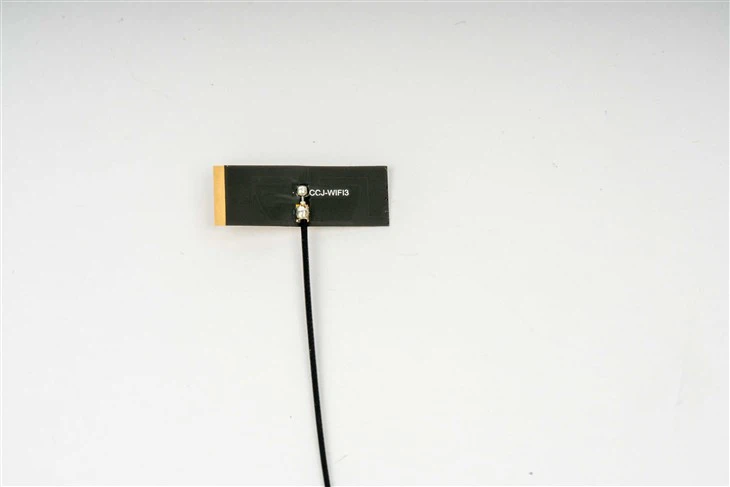
We've also seen some innovative designs where the FPC Wifi Antenna is placed outside the metal enclosure but connected to the device inside through a cable. This way, the antenna can operate in an environment that's free from the interference caused by the metal.
It's important to note that when using an FPC Wifi Antenna in a metal enclosure, proper testing is crucial. We need to make sure that the antenna is performing as expected. This involves measuring the signal strength, the radiation pattern, and the overall efficiency of the antenna. By doing these tests, we can fine - tune the design and make any necessary adjustments to ensure optimal performance.
Now, let's compare the FPC Wifi Antenna with another popular type of antenna in our product line, the FPC 4G Antenna. While both are FPC - based antennas, they operate in different frequency bands. The FPC 4G Antenna is designed to work with 4G cellular networks, which have different characteristics compared to Wi - Fi networks.
The 4G frequency bands are generally lower than the Wi - Fi frequency bands. This means that the 4G signals can penetrate through materials, including metal, a bit better than Wi - Fi signals. However, the same principles of dealing with metal enclosures still apply. We can use similar techniques like slot antenna design or dielectric materials to make the FPC 4G Antenna work effectively in a metal enclosure.
If you're in the market for FPC Wifi Antennas or FPC 4G Antennas, and you're dealing with metal enclosures, we're here to help. Our team of experts has years of experience in antenna design and development. We can work with you to come up with the best solution for your specific needs. Whether it's a custom - designed antenna or an off - the - shelf product, we've got you covered.
If you're interested in learning more about our products or have any questions regarding using our antennas in metal enclosures, don't hesitate to reach out. We're always happy to have a chat and discuss how we can help you with your antenna requirements.
In conclusion, while using an FPC Wifi Antenna in a metal enclosure can be challenging, it's definitely possible with the right design and techniques. With our expertise and high - quality products, you can ensure a reliable and efficient Wi - Fi or 4G connection, even in a metal - enclosed environment. So, if you're looking for a trusted supplier of FPC antennas, look no further.
References
- Balanis, C. A. (2016). Antenna Theory: Analysis and Design. Wiley.
- Pozar, D. M. (2011). Microwave Engineering. Wiley.