

As a supplier of FPC Wifi Antennas, I've been closely following the trends and technological advancements in the antenna industry. The future of FPC Wifi Antennas holds great promise, with several potential new features that could revolutionize their performance and applications. In this blog post, I'll explore some of the exciting new features that may be added to FPC Wifi Antennas in the future.
Enhanced Multi - Band Support
Currently, FPC Wifi Antennas support multiple Wi - Fi bands such as 2.4GHz and 5GHz. However, in the future, we can expect them to support even more bands, including the emerging 6GHz band. The 6GHz band offers wider channels and less interference, which can significantly increase the data transfer speed and capacity of Wi - Fi networks. By adding support for the 6GHz band, FPC Wifi Antennas can provide users with faster and more reliable connections, especially in high - density environments such as offices, stadiums, and shopping malls.
Moreover, as the demand for IoT (Internet of Things) devices grows, FPC Wifi Antennas may also need to support other wireless communication standards such as ZigBee, Bluetooth, and Thread. These standards operate in different frequency bands, and integrating multi - standard support into a single FPC Wifi Antenna can simplify the design of IoT devices and reduce their cost. For example, a smart home device could use a single FPC Wifi Antenna to communicate with both the home Wi - Fi network and other IoT devices using Bluetooth or ZigBee, eliminating the need for multiple antennas.
Adaptive Beamforming
Beamforming is a technique that allows an antenna to focus its signal in a specific direction, rather than broadcasting it omnidirectionally. This can improve the signal strength and quality in the desired direction, while reducing interference in other directions. Currently, some high - end FPC Wifi Antennas already support beamforming, but in the future, we can expect to see more advanced adaptive beamforming capabilities.
Adaptive beamforming enables the antenna to automatically adjust its beam pattern based on the location and movement of the receiving device. For example, if a user moves around a room, the FPC Wifi Antenna can dynamically change its beam direction to follow the user, ensuring a stable and strong connection at all times. This feature is particularly useful in large indoor spaces or outdoor environments where the signal may be blocked or weakened by obstacles.
In addition, adaptive beamforming can also help to reduce power consumption. By focusing the signal only in the direction where it is needed, the antenna can use less power to achieve the same level of performance, which is beneficial for battery - powered devices such as smartphones, tablets, and laptops.
Improved Miniaturization and Flexibility
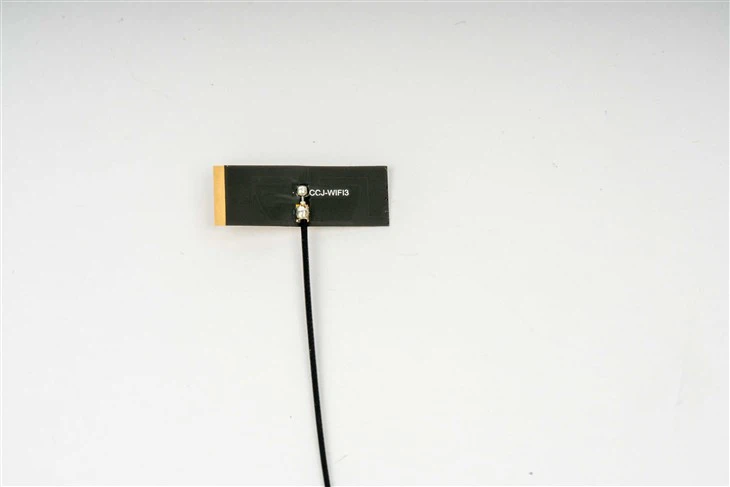
One of the key advantages of FPC (Flexible Printed Circuit) technology is its ability to be designed in small and flexible form factors. In the future, we can expect to see further improvements in the miniaturization and flexibility of FPC Wifi Antennas.
As electronic devices become smaller and more portable, there is a growing demand for smaller and more compact antennas. Future FPC Wifi Antennas may be designed to be even thinner and more lightweight, while still maintaining their performance. This can enable the integration of antennas into smaller devices such as smartwatches, earbuds, and other wearable devices.
In terms of flexibility, FPC Wifi Antennas may be able to bend and twist to fit into more complex shapes and spaces. This can open up new possibilities for antenna placement in devices with irregular geometries, such as curved smartphones or foldable tablets. For example, an FPC Wifi Antenna could be bent around the edge of a device to provide better coverage and performance.
Higher Efficiency and Lower Loss
Efficiency is a crucial factor in antenna design, as it determines how effectively the antenna can convert electrical power into radio waves. In the future, we can expect to see FPC Wifi Antennas with higher efficiency and lower loss.
Advances in materials and manufacturing processes can help to reduce the resistance and parasitic effects in the antenna, which in turn can improve its efficiency. For example, the use of high - conductivity materials and advanced etching techniques can minimize the power loss in the antenna, allowing it to radiate more power with less input.
Lower loss also means that the antenna can operate at a lower temperature, which can improve its reliability and lifespan. This is especially important for devices that are used in high - temperature environments or for extended periods of time.

Integration with Other Technologies
FPC Wifi Antennas may also be integrated with other technologies in the future to provide additional functionality. For example, they could be integrated with sensors to enable smart antenna systems. These sensors could detect factors such as temperature, humidity, and signal strength, and use this information to optimize the performance of the antenna.
Another possibility is the integration of FPC Wifi Antennas with energy harvesting technologies. Energy harvesting allows the antenna to capture and convert ambient energy, such as radio waves or solar energy, into electrical power. This can be used to power the antenna itself or other components in the device, reducing the reliance on external power sources.
Conclusion
The future of FPC Wifi Antennas is full of exciting possibilities. With the addition of features such as enhanced multi - band support, adaptive beamforming, improved miniaturization and flexibility, higher efficiency and lower loss, and integration with other technologies, FPC Wifi Antennas will be able to meet the growing demands of the wireless communication market.
As a supplier of FPC Wifi Antennas, we are committed to staying at the forefront of these technological advancements. We continuously invest in research and development to bring these new features to our products and provide our customers with the best - in - class antenna solutions.
If you are interested in learning more about our FPC Wifi Antennas or have specific requirements for your projects, we encourage you to contact us for a detailed discussion. We look forward to working with you to explore the future of wireless communication together.
References
- Antenna Engineering Handbook
- Wireless Communication Systems: Advanced Techniques for Signal Reception
- Industry reports on wireless communication and antenna technology from research firms such as Gartner and IDC.