

To begin with, let's consider its importance: it serves as an indispensable fundamental component within a vehicle's electrical and electronic architecture. In simple terms, it acts as a bridge between otherwise isolated circuits, ensuring the stable transmission of electrical current and signals, and enabling the coordinated operation of various electronic modules.
It consists of four primary elements: contacts, a housing (typically plastic), an insulator, and various sealing or locking accessories. The contacts facilitate electrical conduction; the housing provides protection and ensures precise alignment during mating; the insulator maintains electrical isolation between contact points; and additional components-such as sealing rings, positioning pins, and cable clamps-further enhance resistance to vibration and moisture.
As the automotive industry rapidly shifts toward greater electrification and the adoption of new energy technologies, the number of electronic components-including ECUs (Electronic Control Units), BMS (Battery Management Systems), various sensors, and lighting systems-continues to grow. Consequently, the reliability of automotive connectors has a direct impact on the operational safety of the entire vehicle.

Now, let's examine the specific role these components play within the automotive industry.
1. Enabling Power and Signal Transmission
This is the primary function of a connector. On one hand, it delivers operating current to vehicle components such as lights, motors, and body electronics; on the other, it transmits control signals between sensors and controllers. This facilitates data exchange among ECUs, battery management systems, and sensing devices, ensuring the proper operation of powertrain, body, and safety systems. COCENTRA's 10-pin, 16-pin, and 18-pin connector series are well-suited for automotive wiring harnesses, control modules, and the power systems of new energy vehicles, enabling high-density signal and power interconnection.
2. Simplifying Assembly and Enhancing Efficiency
By utilizing a plug-and-socket connection method, vehicle manufacturers can pre-assemble wiring harnesses for various components. On the production line, this allows for simple plug-in connections rather than complex, time-consuming soldering. This significantly streamlines the assembly of electronic components and large-scale production processes, ultimately reducing the time required for vehicle manufacturing.
3. Facilitating Maintenance, Repair, and Upgrades
In the event of a malfunction in an onboard electronic component, the faulty part can be quickly replaced by simply unplugging the connector-no need to cut any cables. Furthermore, as technology evolves, new functional components can be integrated without altering the vehicle's existing wiring architecture. This provides greater design flexibility for future product upgrades and greatly enhances the convenience of repairs.
4. Providing Protection in Challenging Conditions
Vehicles often operate in harsh environments characterized by extreme temperatures, vibrations, moisture, and dust. Connectors-utilizing a combination of housings, seals, and insulators-protect internal circuitry by preventing the ingress of moisture and dust, resisting vibrations and shocks, and ensuring that connections remain secure. This prevents issues such as loose contacts or short circuits, guaranteeing stable vehicle performance even under demanding conditions.
5. Cross-Industry Adaptability
Beyond passenger vehicles, qualified automotive-grade connectors are also well-suited for rail transit, industrial automation equipment, and wiring harness systems for precision instruments. This enables their use across diverse scenarios, effectively expanding the scope of their application.
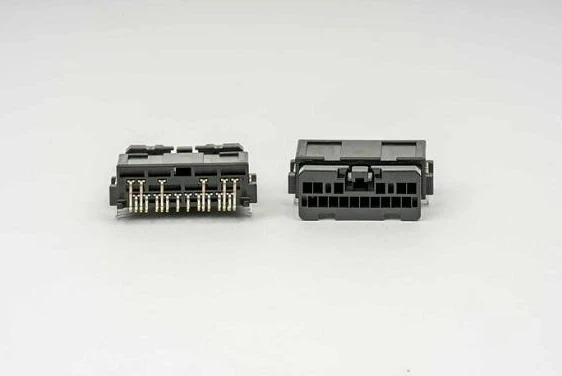
The points above provide a brief overview of the role of automotive connectors. Though small in size, they shoulder the critical responsibility of transmitting power and signals throughout the entire vehicle. A vehicle's assembly efficiency, operational stability, and ease of future maintenance are all closely linked to the quality of its connectors-now you can see just how important they are.
At this point, we would like to briefly introduce COCENTRA Precision Technology. Leveraging automotive-grade design, comprehensive manufacturing capabilities, and customized services, COCENTRA provides highly reliable connector solutions for the automotive and related industries. Our client base includes industry leaders such as BYD, Valeo, Haipeng, Great Wall Motor, FiberHome, Baidu, Quanta Computer, Microsoft, HONOR, Toshiba, Amphenol, Foxconn, and Flex. We welcome inquiries from international partners.